



Is there anything to keep in mind before first use?
Given that you have taken the time to read Setting up the Ceramic Grill: KamadoCLUB post you should be able to start cracking with this one.
Many manufacturers of ceramic grills recommend that the grill should be fired up to 150 for an hour without any food in it. This takes care of any ‘post production dust’ that may remain, secures the fiberglass spacers while warming up the grill for some ‘serious’ cooking. To do so fill up ⅓ of the firebox with coal and ‘fire away’.
- Make sure to ‘fire away’ with ecological wood firelighters or with the help of an electronic lighter. If you were to use the ecological firelighters, put in your cooking system after 10 mins, but if you were to use the electronic lighter you can do so after 1-2 minutes.
- Post firing up, make sure to open up the top and bottom vents fully and do not leave the grill until you’ve set your temperature, if you leave the grill unattended you might just come back to find a temperature of 450 wasting some of the coal that you have.
- Upon opening the vents the temperature gauge will start reaching 100, when this temperature is reached start to slowly seal up the vents to about half, if the temperature is still increasing reduce the width of the vents by another half so that the top vent is open by about 30%, and the the bottom vent by about the width of 2 fingers. Upon reaching 150 degrees seal up the vents appropriately so that the temperature remains stable.
Once the temperature is stabalised on 150 degrees, don't touch the vents. Given that you’ve filled up ⅓ of the firebox with coal, you should find that the temperature should remain stable for up to 8 hours, if you were to accidentally forget that you were firing the grill away, you should be able to cook up a nice scrambled egg in the morning.
Vents:

As you may have already figured out, the wider the vents are open the higher the temperature can rise and so follows that the narrower the vents are then the lower the temperatures that can be reached.
Cleaning and Care:
Beginning from what's visible first, the outside of the grill can be cleaned with a wet cloth and WEAK chemicals used for window cleaning or grease removal, clean whenever the occasion for it arises, typically twice per season should do.
The inner ceramics of the grill should not be cleaned, not with water and especially not with any chemicals. Instead, we recommend you ‘burn out’ the grill a few times per year(season) at a temperature of 350-450 degrees for about an hour, but note that before doing so, you warn the neighbours, as the smell might not be that of a blooming field of lavender and roses, also note that the ceramic heat deflectors can too be left for cleaning, in this way any oil/nasty bits will shrivel up into ash.
Ash Cleaning:
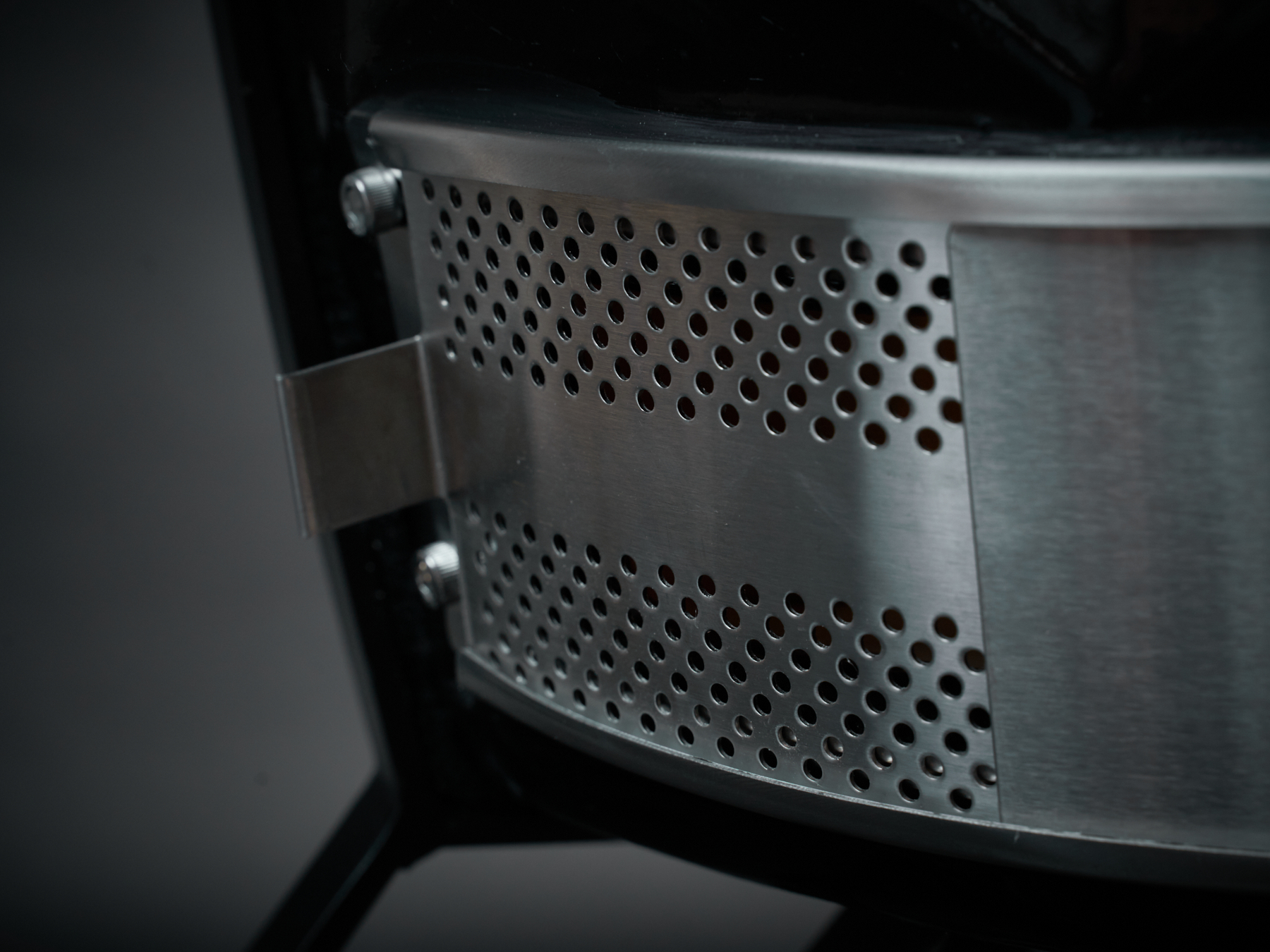
If it so happens that you are doing everything right, but the temperature is not rising and you keep finding that everytime you open the bottom vent ash pours out onto your feet, that would suggest that the poor grill needed a clean about a month ago.
Upon cleaning the grill, it is not recommend to remove the whole firebox rather just the ‘cast iron ash grate’, once that is done continue to brush out the accumulated ash out through the bottom vent, if you happen to have an ash hoover dont be shy to use it as this would be the fastest means of cleaning out the ash.
Check out the other important parts to be mindful of cleaning during your cooking experience.
Thermometer Calibration:
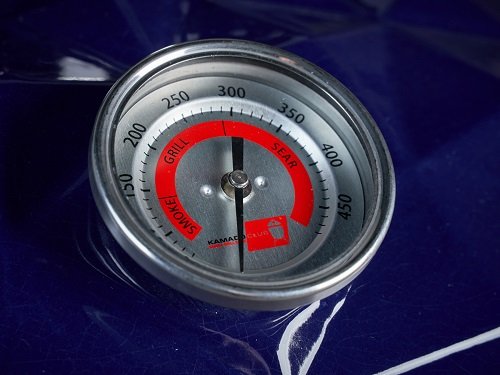
If you suspect that the thermometer’s sense is out, then apply boiling water therapy. Simply set up a pot of boiling water and dip the probe of the thermometer in it, if it shows 100 you have a sound thermometer, if not you’ll need a screwdriver to adjust the screw until the arrow shows 100 degrees not more nor less.
Note #1.
- The temperature that the thermometer registers and the temperature present at the level at which the food is cooking can vary, this is due to the circulation of heat within the grill itself, the difference in a given moment could be between 20-40 degrees and that is totally normal.
Note #2.
- If your thermometer has reached the point of condensation know that this means you are not using the grill enough, be a caring grill master and take care of the poor thing, cook something nice and get the poor thing back up and running, if the condensation persists, turn to the shop you bought it from to discuss replacing it.
Conclusion
Having finished this tutorial, cook away to your hearts intent should you need any more information please refer back to your instruction manual or take the time to read all the blogs in the 'instruction' category.


